
Web Design
results
THE PROBLEM WASN’T TRAFFIC.
IT WAS A CONSTRAINT IN THE BUYING FLOW.
Conversion Rate Increased 4.2x
2.83% → 11.99%
Conversion increased across all channels — including paid traffic — without increasing demand.
After a site rebuild, conversion dropped. The problem wasn’t traffic — it was a broken buying flow. Fixing the constraint increased conversion across all channels, including paid traffic, without adding more demand.
Categories
Conversion Constraint
Ecommerce Growth
Revenue Bottleneck
Introduction
This was not a traffic problem.
The business had demand.
Traffic was coming in.
Orders were happening.
Marketing channels were active.
But performance felt weaker than it should have been relative to the opportunity.
That feeling turned out to be correct.
And the data made it clear.
The Situation
The business had recently relaunched its website.
On the surface, things looked functional:
- traffic was flowing
- orders were being placed
- marketing channels were active
But something was off.
The first real red flag was not subjective.
It was measurable.
The new website was converting worse than the one it replaced.
This is critical.
Because when a business rebuilds its site, performance should improve — or at minimum, hold.
Instead, conversion efficiency dropped.
That meant the system was losing revenue relative to the same level of demand.
The Misdiagnosis
The natural assumption in this situation would be:
- we need more traffic
- we need to push marketing harder
- we need to scale campaigns
But that would have been the wrong move.
Because increasing traffic into a system that converts worse than before does not fix growth.
It amplifies inefficiency.
The Real Constraint
The issue was not traffic.
It was conversion.
Specifically, the product personalization flow was breaking the buying process at the most critical moment.
Customers had to:
- enter personalization details
- click “save”
- then manually add the product to cart
This created friction and confusion at the exact point where intent was highest.
Instead of progressing, users dropped off.
The system was generating demand — and failing to capture it.
What Changed
The solution was not more marketing.
It was removing the constraint.
The personalization flow was restructured:
- after entering details → item is automatically added to cart
- cart drawer appears immediately
- clear next steps: Checkout or Continue Shopping
- live preview reinforces purchase confidence
This aligned the experience with user behavior:
When someone personalizes a product, they are already trying to buy.
The system needed to support that — not interrupt it.
The Result
Once the constraint was removed, performance improved across the entire system.
Not just on the site.
Across every channel driving traffic into it.
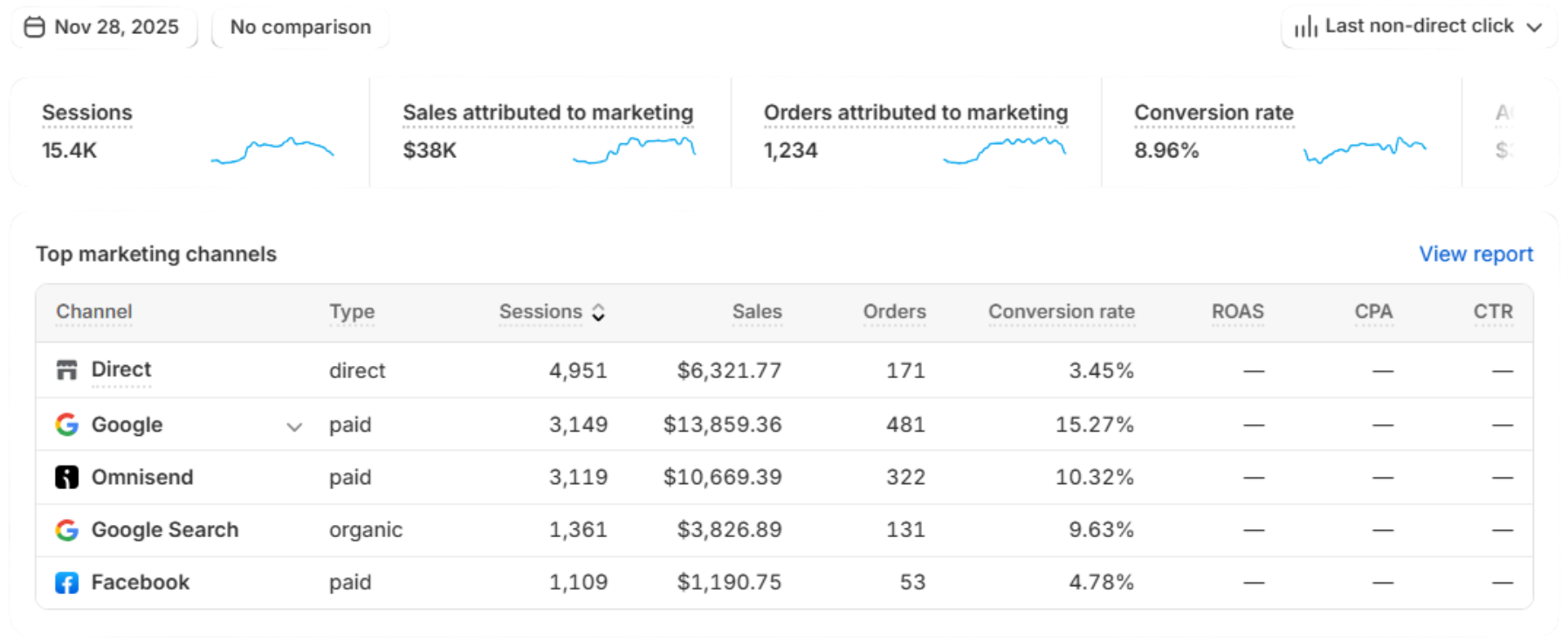
From your actual data:
- Overall conversion rate reached ~8.96%
- Google Ads conversion rate reached 15.27%
- Email (Omnisend) conversion rate exceeded 10%
- Organic traffic converted at 9.63%
This is the key point:
👉 The improvement was not isolated
👉 It increased conversion across all channels
That means:
- paid traffic became more profitable
- email became more productive
- organic traffic became more valuable
The same traffic — now producing more revenue.
What This Actually Proves
This was never a demand problem.
The business already had:
- traffic
- interest
- buying intent
It just was not capturing enough of it.
Once the constraint was removed:
- existing demand converted more efficiently
- marketing ROI improved automatically
- revenue increased without needing more traffic
This is the pattern most businesses miss. They assume more traffic will fix revenue, when the real issue is usually somewhere in the system. This is exactly why more leads won’t fix a broken revenue system.
The Insight
Most businesses try to scale before fixing the system.
They assume:
More traffic → more revenue
But if conversion is weak:
More traffic → more loss
The leverage is not always in doing more.
It is in fixing what is already limiting output.
Revenue Constraint Diagnosis
If your business is generating activity but not enough revenue, the problem may not be demand.
A Revenue Constraint Diagnosis identifies where revenue is actually getting stuck so you can fix the constraint before investing more into marketing that won’t solve the issue.
If performance feels lower than it should be relative to your traffic and demand, start with a Revenue Constraint Diagnosis.